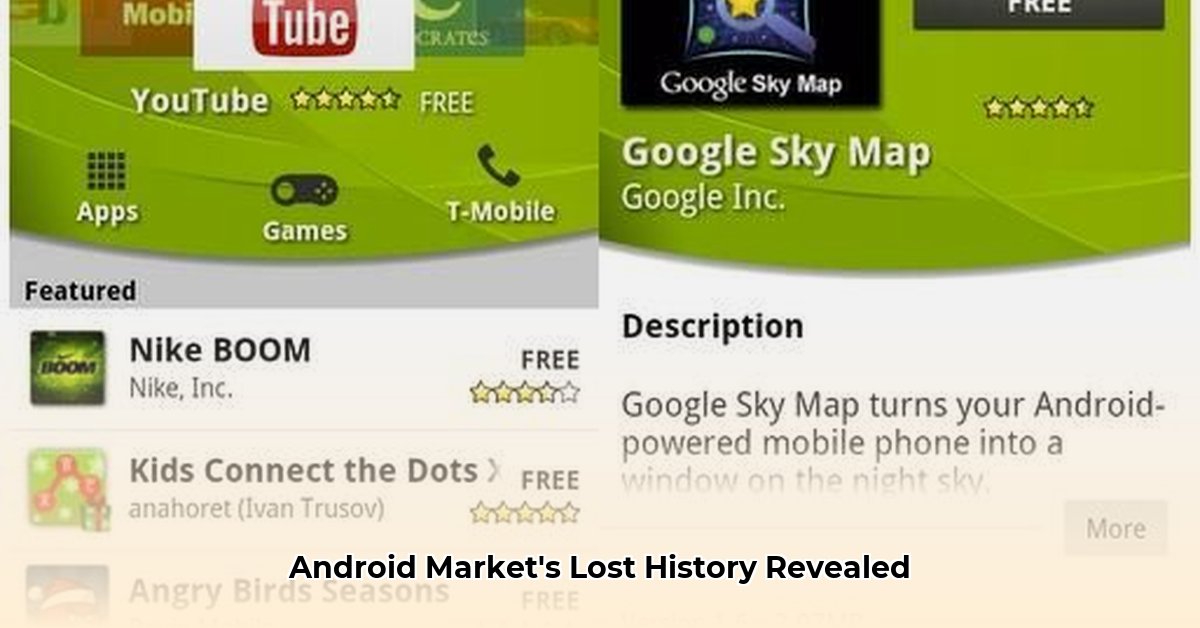
Remember the early days of Android smartphones? Before the seamless experience of the Google Play Store, getting apps was a Wild West adventure. This article explores the original Android Market, its limitations, and its eventual evolution into the modern app store we know and rely on today. We'll uncover the challenges of sideloading apps, the frustrations of navigating a less-refined interface, and the security risks involved. This journey will showcase how far Android app downloads have come and what lessons were learned along the way.
The Dawn of the Android Market: A Basic Beginning
The first Android Market was a rudimentary platform, reflecting the nascent mobile app ecosystem. It was a time of experimentation and innovation, much like the early days of the internet. Few could have predicted the pivotal role apps would play in our daily lives. The simplicity of the Android Market, however, masked underlying complexities. How did this impact users?
Sideloading: A Necessary Evil?
One of the most defining characteristics of the early Android Market era was the prevalence of sideloading. This involved manually enabling the "Unknown Sources" setting (allowing installations from outside the official store), then downloading APK files (Android Package Kits) directly from various sources, including developer websites. While this provided broader app access, it also posed significant security risks. Installing apps felt like a gamble – would it function as expected, or was it harboring malicious code concealing itself as harmless software? This reflects the early days of the internet, when similar security concerns prompted many users to proceed with caution.
Did the convenience of sideloading outweigh the inherent security risks? This is a critical question to consider when reflecting on this era of app installation.
Navigating the Android Market: A User's Perspective
The Android Market, while functional, lacked the polished user experience of its successor. Searching for specific apps was a challenge, often requiring precise knowledge of the app's name. The absence of robust search functions and organized categories made app discovery a hit-or-miss affair. App reviews, if available, were less structured and less trustworthy, making it difficult to gauge an app’s suitability. Furthermore, compatibility issues were common, as different Android versions often led to frustrating incompatibilities.
What were the major frustrations users faced when trying to find and install apps in the Android Market era? This was a common question on early Android forums. This often led to many apps being compatible with only a limited number of Android devices.
The Genesis of Google Play: Addressing the Market's Shortcomings
The Android Market's limitations – primarily its security vulnerabilities and poor user experience – fueled the need for a significant overhaul. The transition to Google Play wasn't abrupt; rather, it was a gradual evolution, addressing the identified shortcomings. Google Play provided enhanced security measures, improved app discovery mechanisms, more robust user review systems, and streamlined app updates – all factors that contributed to a much-improved user experience. The shift represented a significant step toward a more secure and refined mobile app ecosystem.
Then and Now: A Comparative Analysis
The table below highlights the key differences between the Android Market and the Google Play Store:
| Feature | Android Market | Google Play Store |
|---|---|---|
| Security | Risky due to sideloading | Significantly safer, with app review processes |
| App Discovery | Difficult search, limited categories | Easy search, well-defined categories |
| User Reviews | Sparse, unreliable reviews | Detailed, moderated user reviews |
| App Updates | Manual, unreliable process | Automatic updates; seamless and simple |
| Compatibility | Frequent compatibility issues | Improved compatibility across devices |
This transition showcases the remarkable evolution of Android's app ecosystem.
Installing Android Apps from Unknown Sources: A Risky Undertaking
Before the ubiquitous Google Play Store, users often had to enable "Unknown Sources" installations to access apps not yet available on the Android Market. This practice, though necessary, significantly increased security vulnerabilities. This section explores the risks and mitigation strategies employed by users in this era.
The Risks of Sideloading
Enabling installations from unknown sources exponentially increased the risk of malware exposure. Malicious apps, disguised as legitimate ones, could easily infiltrate devices, potentially causing significant harm. Given the nascent stage of Android's security, this risk was substantial.
What measures did cautious Android users take to minimize the dangers associated with installing apps from unknown sources? This was a constant concern in online forums.
Minimizing the Risks
Users employed several strategies to mitigate the security risks associated with sideloading apps:
- Source Verification: Download apps only from trusted websites and developers.
- Reputation Checks: Research app reviews and user feedback on forums and communities before installation.
- Antivirus Software: Use robust antivirus apps to scan APKs for potential threats prior to installation.
- Permission Scrutiny: Carefully review and assess requested app permissions before installation.
These methods, though not foolproof, helped users navigate the risks associated with installing apps outside the official channels.
The Evolution of Android Security
Google responded to these security vulnerabilities by bolstering Android's security measures. Stricter permission management and the increasing dominance of the Play Store significantly reduced the need for "Unknown Sources" installations. This evolution highlights Google's ongoing commitment to enhancing Android's security.
Key Takeaways:
- The Android Market's limitations highlighted the need for a more secure and user-friendly app store.
- Sideloading, while necessary in the early days, came with substantial security risks.
- Mitigating risks required careful source verification, reputation checks, security software, and a thorough review of app permissions.
- The Google Play Store's emergence significantly improved user experience and security.
The transition from the Android Market to Google Play exemplifies the rapid evolution and maturation of the mobile app ecosystem.
⭐⭐⭐⭐☆ (4.8)
Download via Link 1
Download via Link 2
Last updated: Friday, May 09, 2025